How to Protect an Aging Parent from Scams: What Actually Works
If you’re looking for practical ways to protect an aging parent from scams, the FBI’s most recent elder fraud report offers a sobering backdrop: $7.7 billion in losses from more than 201,000 complaints by victims 60 and older in 2025 alone. That’s a 37 percent jump from the year before, and the average loss now exceeds $38,000. More than 12,000 older victims lost over $100,000 each.
Here’s the part most articles on this topic don’t tell you: those numbers have kept climbing despite 20 years of public awareness campaigns, caregiver training programs, and community education sessions. If awareness alone reduced losses, we would see that in the data. We don’t.
I spent over 20 years building identity protection products. I watched the industry’s senior-focused messaging get more polished every year while the losses got bigger. This article is about what I learned looking at the gap between the advice we were giving and the outcomes we were measuring. Awareness matters. It just isn’t close to the most effective intervention, and treating it like the primary one is how well-meaning adult children spend years worrying about their parents while the actual levers go unpulled.
What the Scams Actually Look Like in 2025
Five archetypes account for most of the financial damage to older victims. Each one has a specific mechanical shape and a specific psychological hook. Recognizing the shape matters more than memorizing scripts, because the scripts change constantly and the shapes don’t.
Tech Support and “Phantom Access” Scams
The most common scam type reported by victims over 60. It starts with a browser lock-screen that freezes the computer and displays a warning (often with a siren sound) instructing the user to call a number for Microsoft, Apple, or their internet provider. The call goes to a scripted call center. The script convinces the victim to grant remote access to their computer, then pivots to “we found unauthorized charges on your bank account” and walks them through transferring money to “safe” accounts controlled by the scammer.
The hook is loss aversion. The scam is not framed around a promised gain, but around the threatened loss of something the victim already believes they own or control. That framing can trigger urgency and narrow attention before deliberate analysis has time to engage. Older adults are not uniquely poor at detecting fraud, but in some cases age-related changes in processing speed may give scammers an advantage when the script relies on surprise, time pressure, and cognitive overload.
Government Impersonation Scams
Calls claiming to be from the Social Security Administration, the IRS, or local law enforcement. The message is usually that the victim’s Social Security number has been “suspended” because of suspected criminal activity, that there’s a warrant for their arrest, or that they owe back taxes. Payment is demanded in gift cards or cryptocurrency, which are irreversible once sent.
The hook is fear of legal consequence combined with shame. Critically, the scammer almost always instructs the victim not to tell anyone, including family members, because “this is a federal investigation.” That instruction isolates the victim from the single most effective intervention available to them, which is a trusted person saying “this doesn’t sound right.”
Romance and Investment Hybrid Scams
Sometimes called “pig butchering” in industry shorthand. The initial contact happens on a legitimate platform, a dating app, Facebook, sometimes a wrong-number text. The scammer invests weeks or months building what feels like a real relationship. Eventually the conversation turns to investing, specifically to a cryptocurrency platform the scammer “made good money on.” The platform is a sophisticated fraud; any money deposited is stolen immediately, but the interface shows fake returns to encourage more deposits. When the victim tries to withdraw, they’re told they owe “taxes” or “compliance fees,” which extract the last available dollars before the platform disappears.
These are the most financially devastating scams on the list. The hook isn’t fear. It’s loneliness, attachment, and the sunk-cost fallacy. Victims often defend the scammer to investigators well after financial loss is confirmed, because accepting the fraud means accepting that the relationship wasn’t real. That’s a psychologically brutal double loss, and it’s part of why these scams are so hard to intercept.
Grandparent Scams (Now AI-Enhanced)
A call in the middle of the day: “Grandma, it’s me. I was in an accident. Please don’t tell Mom.” A follow-up call from a “lawyer” or “bail bondsman” explains the bail amount and how to send it.
This scam has become meaningfully more dangerous in the last two years. Using as little as a few seconds of audio scraped from a social media video or a voicemail, widely available voice cloning tools can generate a convincing replica of a specific grandchild’s voice. Real-time synthesis now allows the cloned voice to hold a live conversation. The victim isn’t hearing a scripted recording that might sound off; they’re hearing what sounds like their grandchild in distress.
The hook bypasses rational processing entirely. The instruction for secrecy (“don’t tell Mom, I’m embarrassed”) sounds like a plausible feature of the story rather than a red flag.
Medicare and Health Insurance Fraud
A call offering “free” genetic testing kits, back braces, diabetic supplies, or COVID tests “covered by Medicare.” The victim provides their Medicare Beneficiary Identifier, which is then used to submit thousands of fraudulent claims against their coverage. The victim may see no immediate financial loss, which is part of what makes this so effective. What gets damaged is the integrity of their Medicare records, which can affect future coverage approvals, and in some cases prescription histories get polluted with conditions they don’t have.
The hook is the absence of any apparent cost combined with the complexity of Medicare benefits. Most seniors legitimately don’t know what their coverage includes, which makes a “you qualify for a free benefit” pitch land as plausible rather than suspicious.
Why the Standard Advice Usually Falls Short
The challenge with most guides on how to protect an aging parent from scams is that they focus on awareness training as the primary intervention. The usual prescription for senior fraud prevention is: teach them to recognize the warning signs. Read them the list. Put up flyers at the community center. Forward them AARP alerts.
This isn’t useless. But the research on scam awareness training as a primary intervention is more uncomfortable than most protection articles let on. Studies measuring whether training reduces victimization rates in the 65-plus population have generally shown modest or statistically insignificant effects over 12 months. The reasons are structural, not a matter of effort or attention.
Learned knowledge degrades before the scam arrives. A warning sign memorized in February is not reliably present in October. Scam encounters are rare and unpredictable; training delivered outside of that moment fades before it can be used.
Emotional arousal shuts down the system where the training lives. The part of the brain that stores factual knowledge about scams is the prefrontal cortex. The part of the brain that responds to a panicked phone call about a grandchild in jail is the amygdala. When the amygdala is fully activated, the prefrontal cortex is effectively offline. In that state, knowing what a grandparent scam looks like doesn’t help, because the victim isn’t in a mental state where they can retrieve and apply that knowledge.
Scam scripts update faster than curriculum does. By the time a specific script is disseminated in prevention materials, the criminal operators running the scam have already adjusted.
The most vulnerable seniors are the least likely to be reached. Older adults with early cognitive decline, recent bereavement, or social isolation are disproportionately victimized. They are also the least likely to attend a community fraud prevention session or retain what they hear there.
None of this means awareness is worthless. It means awareness is a supporting layer, not the foundation. The foundation is infrastructure that intercepts the scam before the victim has to make a real-time decision under stress. That’s where the actual leverage lives.
What Actually Reduces Losses: The Layers in Order of Effectiveness
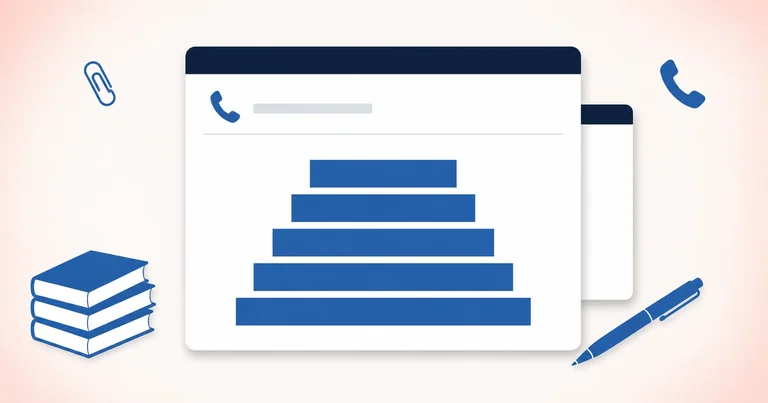
The layers below are ordered roughly by how much protection they provide per unit of effort, starting with the ones that do the most work without requiring the senior to recognize the scam at all. The ideal protection strategy uses several layers together. But if you can only implement one or two, the top of this list is where to start.
Layer 1: Stop the Calls Before They Reach the Phone
Most of the scams in the first section start with a phone call. Dramatically reducing the volume of scam calls that reach the phone is the single most cost-effective intervention available, and it costs nothing.
Every major U.S. carrier now offers network-level scam call blocking. Verizon has Call Filter, AT&T has Active Armor, T-Mobile has Scam Shield. The free tiers block or label suspected scam calls before they ring through. The paid tiers add more aggressive filtering, spam risk scores, and the ability to block entire categories of calls.
These services aren’t perfect; scammers rotate numbers constantly and some calls get through. But they cut the daily volume of robocalls significantly, which matters because each unanswered scam call is one fewer opportunity for a script to land.
A second layer of protection at the device level is worth enabling if your parent uses a reasonably current phone. iPhones have Silence Unknown Callers, which routes calls from numbers not in their contacts directly to voicemail. That setting alone eliminates the vast majority of scam calls, with the tradeoff that a legitimate call from an unknown number (a doctor’s office calling back, for example) also gets silenced. Google Pixel phones have on-device AI scam detection that flags active calls in real time as likely scam attempts. Other Android phones have similar features through the Phone app’s spam protection settings.
Layer 2: Lock Down the Money Movement
Most of the catastrophic losses in senior fraud happen when money moves. Putting friction in front of that movement stops fraud at the last possible moment, which is often the only moment when the scam is detectable to a third party.
Set up a Trusted Contact Person at every financial institution. Under FINRA Rule 4512, brokerage firms are required to make reasonable efforts to obtain a trusted contact. SEC-approved rules allow firms to place temporary holds on disbursements when they suspect financial exploitation. Most banks now offer equivalent programs voluntarily.
A trusted contact is not a power of attorney. The person named doesn’t gain any authority to move money or access accounts. They’re simply someone the institution can call if they see something suspicious, if the account holder seems confused, or if a disbursement pattern looks unusual. For most adult children, being named as your parents’ trusted contact at their bank, brokerage, and any IRA custodian is the single highest-leverage protective step you can take. It takes a 10-minute phone call per institution to set up.
Lower default transaction limits. Most banks allow customers to set daily or transaction-level limits on wire transfers, ACH transactions, and debit card purchases. Reducing these limits doesn’t prevent legitimate large transactions; it just requires a deliberate step to raise the limit temporarily, which is exactly the kind of friction that breaks the momentum of a scam. A scammer pushing a victim to wire $50,000 immediately can’t push them through a daily wire limit of $5,000 without a bank call that may ask questions.
Understand how quickly wires clear. Wire transfers are effectively irreversible once received. ACH transfers have a short reversal window but often become final within days. The practical implication: if a scam is detected within a few hours of the transfer, there’s sometimes a chance to recover funds through the bank’s recovery process or through the FBI’s Financial Fraud Kill Chain, which can freeze funds at the receiving institution if reported quickly enough. After a few days, recovery becomes very unlikely. Speed of detection is what the layers above are buying.
Layer 3: Neutralize the Secrecy Tactic
Multiple scam archetypes depend on telling the victim not to tell anyone. The government impersonation scam says “this is a federal investigation.” The grandparent scam says “don’t tell Mom, I’m embarrassed.” The romance scam says “our relationship is private.” This isn’t coincidence. Social isolation is the mechanism that prevents the most effective natural intervention, which is a trusted person saying “that doesn’t sound right.”
The conversation that specifically counters this is simple and worth having explicitly, in advance, with any older parent or relative. It goes something like:
If anyone ever calls you, emails you, or sends you a message telling you not to tell me something, I want you to call me anyway. I will not be upset. I will not be disappointed. You will not be in trouble. The instruction to keep it secret is itself the warning sign. It doesn’t matter who the person says they are. It doesn’t matter what the consequence sounds like. Call me first.
That conversation, had once and repeated periodically, provides more protection than any specific scam education I’m aware of. It turns the secrecy instruction itself, which is the hardest part of the scam to fake around, into the trigger that activates the intervention.
The corollary: the adult child needs to actually be reachable and needs to respond without judgment when the call comes. A single “why would you fall for that?” moment can unravel years of this trust in a single conversation.
Layer 4: Credit Freezes and Identity Fundamentals
Credit freezes at the three major bureaus don’t directly prevent the scam types above from succeeding, but they block a significant secondary consequence: the fraud that happens when a scammer gets enough information during a scam to open new accounts in the victim’s name later.
The full step-by-step process is in our credit freeze guide. For an older adult, the freeze is genuinely free, doesn’t expire, and doesn’t interfere with existing accounts or credit scores. It’s one of the few interventions with no downside.
The less commonly discussed companion step is an IRS Identity Protection PIN. Tax-related identity fraud is one of the few scam types where the victim sometimes doesn’t find out for months, when their legitimate return gets rejected as a duplicate. Enrolling in the IP PIN program takes a few minutes online and blocks that entire fraud vector.
Layer 5: Paid Identity Protection Services, Where They Actually Help
For seniors specifically, the features of a paid identity protection service that matter most aren’t the monitoring breadth. They’re the human support.
Look for services that offer:
Live U.S.-based restoration specialists. When a senior is dealing with fraud, the value of someone who can pick up the phone, understand the situation, and guide them through the next steps is genuinely high. This is the most underappreciated feature of the entire category. Our comparison article covers which providers invest most heavily in restoration support.
Trusted contact or family account features. Some services allow a family member to receive alerts on the senior’s account, which creates a second set of eyes on any suspicious activity. This is functionally similar to the Trusted Contact Person framework at financial institutions, extended to identity monitoring.
Senior-specific product design. A small number of providers specifically position around the senior demographic, with interfaces and support models built for it. EverSafe is the clearest example in this category. See our EverSafe review for the details. For most other services, senior usability is an afterthought rather than a design focus.
What I’d avoid: services sold primarily on monitoring feature count. A senior who can’t navigate a dashboard full of dark web alerts isn’t being helped by having more dark web alerts. Breadth of monitoring matters less than quality of support in this demographic.
A Practical Checklist for Adult Children
If you’re reading this because you’re worried about a parent, here’s the concrete sequence. These concrete steps to protect an aging parent from scams can be implemented in just a few weekends of focused effort.
Within the next week:
- Call their bank and ask to be added as a Trusted Contact Person. Do the same with any brokerage or retirement account.
- Have the secrecy conversation. Not as a lecture. As a specific, warm, one-time commitment: “If anyone tells you not to tell me something, call me anyway.”
- Enable their carrier’s scam call blocking (Verizon Call Filter, AT&T Active Armor, or T-Mobile Scam Shield). The free tier is a fine starting point.
Within the next month:
- Review transaction limits on their checking account and debit card. Lower the defaults for wire transfers and large ACH payments. They can raise limits temporarily when legitimately needed.
- Place credit freezes at Equifax, Experian, and TransUnion. See our credit freeze guide for the process.
- Enroll them in the IRS Identity Protection PIN program.
- On their phone: enable iPhone’s Silence Unknown Callers, or Android’s built-in spam protection, or Google Pixel’s on-device scam detection if they have a compatible phone.
Ongoing:
- Check in regularly without making it feel like surveillance. The goal isn’t to catch them doing something wrong. It’s to be a normal, expected part of their week, so that when something unusual does happen, calling you is the natural response.
- If they have a history of previous victimization, social isolation, or early cognitive decline, consider a paid identity protection service with strong live support. See our identity protection comparison for providers with meaningful senior-oriented features.
If your parent is resistant to any of this, start with the trusted contact step at their bank, because it’s almost invisible to them and provides real downstream protection without requiring any behavior change on their part.
The Honest Bottom Line
The industry I came from sells fear and then sells protection from fear. That’s the business model. It’s why every January brings a new wave of “these are the shocking scams targeting your parents” content, and it’s why the advice in most of that content centers on awareness, because awareness is the product being sold.
The actual research on what reduces losses points somewhere else. The most protective interventions are the ones the senior doesn’t have to think about: the scam call that never rings through, the wire transfer that hits a limit, the bank that calls the trusted contact before the money leaves. Layered behind that is a human-scale intervention that’s entirely free: the standing agreement that secrecy is itself the signal, and that calling the trusted person first is always the right move.
Awareness matters as a supporting layer. A senior who understands the basic shapes of the five scam archetypes above is better off than one who doesn’t. But if you spend your energy only on awareness and skip the infrastructure, you’re doing the equivalent of teaching someone to dodge bullets instead of putting up a wall.
The wall is cheaper, faster, and more effective. Build the wall first.
For the full process on credit freezes, including the specific steps at each bureau, see our credit freeze guide. If you’re weighing whether a paid identity protection service makes sense for your situation, our identity protection comparison covers which providers actually invest in the senior-oriented features that matter. If you’re specifically shopping for a parent or older adult, our best identity protection for seniors comparison covers which services are actually built for that demographic.
Tom Reardon spent over 20 years in product and operations at major identity protection providers. He writes at MyScamGuide.com to give consumers the honest picture the industry’s marketing never did.
Recommended resources:
- IC3.gov: FBI Internet Crime Complaint Center, where elder fraud should be reported
- IdentityTheft.gov: FTC official recovery resource with tailored checklists
- AARP Fraud Watch Network Helpline: 877-908-3360, free helpline for scam questions and post-incident guidance
- FINRA Trusted Contact Person Information: explainer on the FINRA 4512 framework
- IRS Identity Protection PIN: free annual PIN that blocks tax identity fraud